.avif)
.avif)
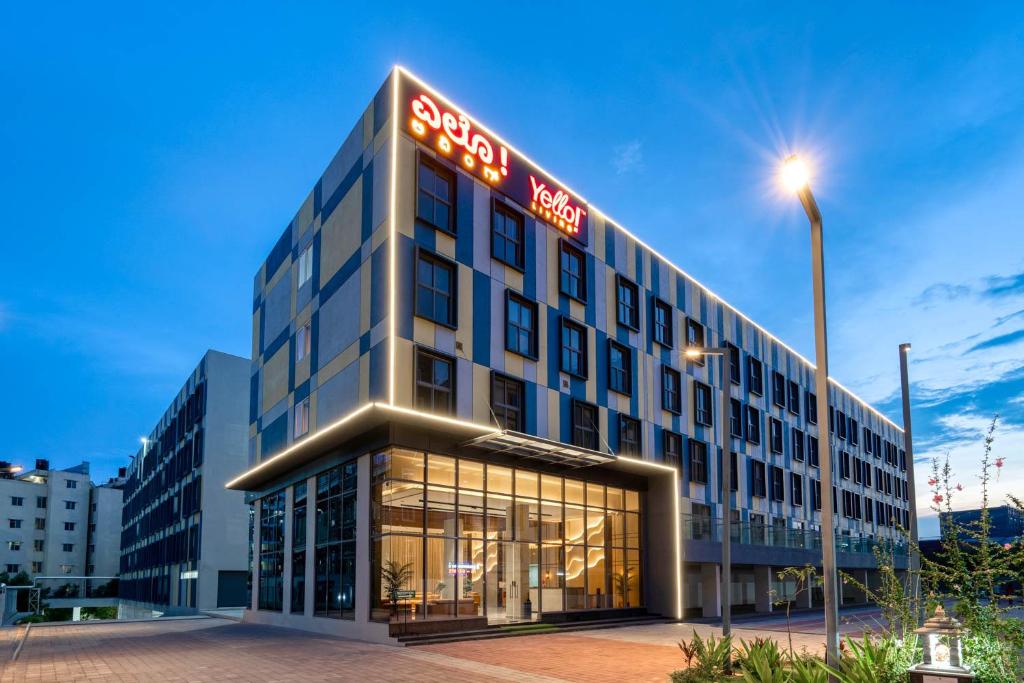
See how Digital Advantage Media framed a connected paid media, conversion and attribution system for Yello Coliving's launch.
A new coliving brand in Whitefield has an immediate commercial challenge: beds need demand, while awareness takes time to build. Digital Advantage Media identifies Yello Coliving as a launch acquisition case study. This page documents the launch context, the acquisition framework, the measurement model and the agency-reported outcomes - including where the public evidence stops.
A performance marketing agency in Bangalore can run paid acquisition against commercial outcomes rather than platform metrics. For a coliving launch, that means connecting Google Ads, Meta Ads, landing pages, analytics and lead handling around qualified enquiries, tours, bookings and occupancy contribution - not cost per lead alone.
Key takeaways
- The challenge: Yello Coliving entered the Whitefield, Bengaluru market as a new coliving brand in a competitive accommodation category.
- The approach: Paid media, creative, landing pages, analytics and lead follow-up can operate as one connected system rather than separate channel workstreams.
- The measurement shift: Campaign decisions should follow qualified enquiries and tours, not cost per lead in isolation.
- The reported outcome: Digital Advantage Media's published case-study summary reports demand from launch Day 1, 4.8x ROAS at launch and a full occupancy pipeline.
- The transferable principle: Location-sensitive, high-consideration categories benefit from locality-level campaign structure and timely lead response.
Yello Coliving's launch challenge
Yello! Living operates a coliving property in Whitefield, Bengaluru, positioned as a home-like environment focused on belonging, community and privacy. Its official site promotes bookings and personalised tours across five accommodation categories: Double Sharing, Premium Double Sharing, Private Room, Premium Private Room and Suite, with the Suite marketed for short stays. Digital Advantage Media describes the launch situation as a new coliving brand entering a crowded market with low awareness.
The acquisition problem at launch had four dimensions:
- New-brand visibility. A new operator must establish awareness in a category where prospects may already know local PGs, rentals or coliving alternatives.
- A location-defined catchment. Whitefield demand is tied to commute logic - proximity to IT parks, malls and transport - which narrows the realistic audience and makes locality targeting a primary structural decision. Knight Frank reported 18.2 million square feet of Bengaluru office leasing in H1 2025, and JLL identifies Whitefield as a significant leasing submarket.
- A multi-price-point inventory. Yello's published rates list Double Sharing at ₹15,000, Premium Double Sharing at ₹16,000, Private Room at ₹26,000 plus GST, Premium Private Room at ₹30,000–₹35,000 plus GST and the Suite at ₹4,500 per night. One message may not serve every price point equally well.
- An offline conversion event. In coliving, a tour can be an important commercial step between an enquiry and a booking. Paid media can generate the enquiry, while the sales process carries the prospect through to a decision. Cost per site visit is often the more predictive metric here than cost per lead.
What the campaign had to achieve
Launch campaigns can lose efficiency when marketing and sales optimise against different definitions. Before spend, five terms need agreed meanings.
Qualified enquiry - an enquiry that matches the catchment, budget band, move-in timeline and room-type availability. Everything else is a form fill, not a lead.
Tour or site visit - a meaningful commercial signal in coliving. A prospect who books time to visit has moved from browsing to evaluating.
Booking or move-in - the revenue event. This is the conversion that supports the property’s commercial model.
CAC versus CPL - cost per lead measures media efficiency. Customer acquisition cost measures whether the acquisition model works commercially. Bangalore CPC and CPL benchmarks by industry give a reference point for what an enquiry should cost in this market.
Occupancy contribution - the operator-level outcome: how many beds the campaign filled, and at what cost per filled bed.
A low CPL is not a growth metric if those leads do not progress to tours or bookings.
Digital Advantage Media's performance system for coliving acquisition
Digital Advantage Media positions its service model as a performance system rather than a channel-management model: paid media, creative, conversion experience, analytics and lead handling can operate as one engine. The capabilities below are Digital Advantage Media's stated service architecture. The public Yello case-study summary does not disclose the account-specific channel mix, tools or workflow.
Google Ads for high-intent accommodation searches
Search demand in coliving can split into locality queries, category queries, "near me" queries and alternative-to-PG queries. These can sit in separate campaign structures because their conversion rates, competition and message requirements may differ. Digital Advantage Media's Google Ads capability covers Search, Performance Max and Shopping.
Meta Ads for demand creation and segment targeting
Paid social can reach prospects before they begin an active accommodation search. Digital Advantage Media runs full-funnel Facebook and Instagram campaigns. For coliving, segment separation by room type and price band can matter: a ₹15,000 shared-room prospect and a ₹35,000 private-room prospect may respond to different proof points. How that spend is divided between search and social is covered in Google Ads vs Meta Ads budget split.
Landing pages built for tour and enquiry intent
Message continuity between an ad and its landing page is an important paid-acquisition variable. A locality ad can lead to a locality page, with pricing visible, room categories shown and a form limited to the information needed for qualification. Digital Advantage Media pairs paid media with conversion rate optimisation and performance creative testing so page changes can be assessed against conversion data rather than opinion. For structural guidance, see how to build a high-converting landing page.
Retargeting for consideration-stage prospects
Coliving is a considered decision and prospects may research across multiple visits. Digital Advantage Media offers systematic cross-channel remarketing to re-engage site visitors and non-converting enquiries across Google, Meta and YouTube inventory.
Lead response and qualification
Response speed can influence conversion, rather than functioning only as an operations metric. Digital Advantage Media's Conversational AI stack - WhatsApp automation, AI voice calls, website chatbot and lead qualification - is designed to reduce the gap between enquiry and first contact, and to route qualified enquiries into the sales process while intent is active.
The acquisition funnel: Impression → Click → Enquiry → Qualified enquiry → Tour → Booking → Move-in.
Pro tip: Optimise to the deepest reliable conversion event available, not the easiest platform event. If tour bookings are recorded and importable, optimise to tours - not to form submissions.
From click to move-in: the measurement framework
Coliving businesses can track the full acquisition funnel: cost per lead, qualified lead rate, lead-to-tour rate, tour-to-booking rate, customer acquisition cost and occupancy contribution. Cost per lead is useful for media efficiency, but it can mislead when low-cost leads rarely become residents.
| Layer | Metrics | What it answers | Data source |
| Media efficiency | CPM, CPC, CTR | Can we afford to deliver this message at scale? | Ad platforms |
| Lead generation | CPL, form rate, call rate | Is the enquiry cost sustainable? | Platforms and tracking |
| Lead quality | Qualified-lead rate, contact rate, lead-to-tour rate | Are these enquiries sales-ready? | CRM |
| Revenue conversion | Tour-to-booking rate, CAC, occupancy contribution | Is the demand commercially viable? | Booking and inventory systems |
| Value | Stay duration, renewal rate, revenue per resident | Are the acquisition economics sustainable? | Property and finance records |
Digital Advantage Media's stated process includes conversion tracking and attribution setup, weekly optimisation, a shared live dashboard and monthly reviews tied to revenue. Its Analytics and Attribution service covers GA4, GTM, server-side tracking, CRM integration and custom dashboards - infrastructure that can connect ad spend to revenue rather than clicks. See marketing analytics and attribution for how that stack is built, and the types of data analytics in marketing for how descriptive, predictive and behavioural layers differ.
Did you know? Paid-media reporting becomes more useful when it connects platform activity to CRM outcomes and operational capacity. A campaign that outruns available inventory does not necessarily improve commercial performance.
Pro tip: Separate locality, category, "near me" and alternative-to-PG search intent before comparing channel performance. Blended CPL across four intents may conceal the decisions needed to improve each one.
What changed: results from the Yello Coliving launch
Digital Advantage Media's published case-study summary reports three outcomes for the Yello Coliving launch.
| Reported outcome | Value | Evidence status |
| Demand from launch | Day 1 | Agency-reported |
| ROAS at launch | 4.8x | Agency-reported |
| Occupancy pipeline | Full | Agency-reported |
These figures are first-party agency-reported claims. The public case-study summary does not disclose the reporting period, calculation method, source systems, attribution window or underlying totals.
Performance outcomes are based on campaign and CRM data available during the engagement period. Results vary by market conditions, budget, sales process and property availability.
Did you know? Coliving acquisition can involve at least five conversion points - enquiry, qualification, tour, booking and move-in. A campaign reported at only one of them reflects only part of the commercial picture.
Lessons for coliving, hospitality and real estate brands
- Build campaign structure around localities and catchments, not national keyword lists - commute logic helps define the addressable audience in location-dependent categories.
- Optimise to the deepest reliable conversion event available, because platform-easy events such as form submissions can favour volume rather than revenue.
- Treat lead response speed as a conversion strategy, not an operational afterthought - accommodation and property prospects can evaluate multiple options quickly.
- Feed verified CRM outcomes back into the ad platforms once conversion definitions are documented, so bidding can learn from bookings rather than clicks.
- Match creative to real resident objections - location and commute, safety, pricing clarity, room privacy and move-in flexibility - rather than generic lifestyle imagery.
Pro tip: Report qualified-lead rate and lead-to-tour rate alongside CPL so sales and marketing are assessing the same funnel in the same review.
The same closed-loop logic drives Digital Advantage Media's other property and paid-media work - see the Amintiri Google Ads case study and PPC lead generation to booked revenue. Hospitality operators facing the same direct-demand question can read direct booking campaigns vs OTA commissions.
Why businesses choose Digital Advantage Media as their performance marketing agency in Bangalore
Digital Advantage Media is a Bangalore-based performance company that connects paid media, analytics, creative, SEO, GEO and conversational AI into one revenue system. It operates from WeWork Prestige Central, Infantry Road, Bangalore, and works across healthcare, real estate, manufacturing and hospitality. Ad spend stays in client accounts; Digital Advantage Media charges a flat management retainer - the trade-offs of that model are compared in retainer vs percentage of spend vs pay per lead.
| Dimension | Channel-by-channel execution | Digital Advantage Media's connected system |
| Structure | Separate vendors for ads, creative, analytics and web | Paid media, creative, analytics, SEO, GEO and conversational AI in one engine |
| Reporting | Platform metrics - impressions, clicks, CTR | CPL, CAC, conversion rate, ROAS and revenue |
| Definition of success | The lead form is the endpoint | Lead quality and revenue progression through to booking |
| Creative | Isolated design cycles | Funnel-position and sales-feedback-informed testing |
| Data | Siloed per channel | Campaign, conversion and attribution data in one view |
When comparing performance marketing agencies in Bangalore, the defensible selection criterion is not who claims to be the best performance marketing agency in Bangalore - it is which partner can show the path from click to booked revenue and name the source system behind every number. A performance driven digital marketing agency in Bangalore should be able to produce that walkthrough before the contract, not after it. This buyer's shortlist of Bangalore digital marketing agencies sets out the questions to ask.
For related capability depth, see SEO and AEO services and Google Ads vs Meta Ads budget split.
Frequently asked questions
What does a performance marketing agency in Bangalore do?
It can run measurable customer acquisition across Google Ads, Meta Ads, retargeting, landing pages and analytics, then report against commercial outcomes. Work can be assessed on qualified leads, cost per acquisition, conversion rate and return on ad spend rather than impressions or clicks alone, with tracking designed to connect spend to revenue.
How can performance marketing help a coliving business grow occupancy?
It can capture high-intent accommodation searches in the property's catchment, build awareness among people who have not started searching yet, re-engage considerers across multiple visits, and reduce friction between enquiry and tour booking. Outcomes still depend on pricing, inventory, location and how quickly the sales team responds to enquiries.
Which metrics matter beyond cost per lead?
Qualified-lead rate, lead-to-tour rate, tour-to-booking rate, customer acquisition cost and occupancy contribution. Cost per lead measures media efficiency only. A campaign producing cheap enquiries that never reach a tour is underperforming, even when the platform dashboard shows the lowest CPL in the account.
How do you measure paid media's impact when bookings happen offline?
Through CRM feedback loops and offline conversion imports: enquiries are tagged with a click identifier, outcomes are recorded in the CRM, then uploaded back to the ad platforms. Call tracking and WhatsApp tracking can capture non-form enquiries. Conversion definitions should be documented first, alongside attribution limitations.
How long before a launch campaign produces reliable learnings?
Early signal on creative and keyword relevance can appear quickly. Reliable optimisation depends on accumulating enough downstream conversion data - qualified enquiries, tours and bookings - which is governed by budget, sales cycle length, tracking maturity and creative volume. Thin data can produce conclusions that do not hold.
Does this approach work outside coliving?
Yes. The closed-loop model applies wherever the revenue event happens offline or after a delay - real estate, healthcare, manufacturing and hospitality. The funnel stages change, but the principle does not: optimise to the deepest reliable conversion event and feed verified outcomes back into the platforms.
Looking to improve your digital presence and grow your business with a targeted marketing strategy? Get in touch with Digital Advantage today for a personalised consultation.