.avif)
.avif)
Compare performance marketing agencies in India for 2026. Learn how brand, media, analytics, CRO, SEO and GEO support measurable growth.
The best performance marketing agency is not the one with the longest channel list. It is the partner whose operating model matches your business model, sales cycle, and measurement maturity. A performance marketing agency plans, runs, and improves paid media, creative, and conversion systems against measurable commercial outcomes - leads, bookings, or revenue - rather than platform metrics alone. The right fit depends on your sales cycle, vertical, data infrastructure, and how you define a qualified outcome.
This guide covers a comparison table, an evidence-labelled shortlist, evaluation criteria, and the brand-and-performance framework that separates campaign management from revenue accountability.
Key takeaways
- The best performance marketing agency connects paid media, creative, analytics, SEO and GEO, and conversion systems - not siloed channels.
- ROAS alone is insufficient. Evaluate CAC, CPL, conversion rate, lead quality, and revenue contribution together.
- Brand strength supports commercial efficiency. Nielsen reports a one-point gain in awareness or consideration is associated, on average, with a 1% increase in sales.
- Vertical fit matters. Healthcare, real estate, manufacturing, and hospitality have different lead-quality and attribution realities.
- AI-mediated discovery (GEO), first-party data activation, and conversational conversion now belong in the performance stack.
How we evaluated these performance marketing agencies
Assessment is based on publicly available information and published capability documentation. No hands-on testing is implied, and ordering is editorial rather than a claim of objective market superiority.
- Revenue alignment: reporting that extends past clicks and impressions into CRM, pipeline, or commerce outcomes.
- Measurement maturity: attribution method, conversion definitions, offline conversion imports, and client data access.
- Creative system: creative testing process, production capacity, and landing-page or CRO capability.
- Channel integration: paid media, SEO, content, CRO, analytics, GEO, and conversational flows working as one system.
- Vertical fit: documented experience with relevant industries and buying journeys.
- Transparency: account ownership, reporting cadence, methodology disclosure, and data portability.
Evidence labels used throughout: Publicly stated capability, Case study available, and Not publicly specified.
Digital Advantage Media publishes this guide. Agencies are assessed using publicly available information and the methodology above. Inclusion and ordering are reviewed periodically.
Quick comparison: best performance marketing agencies for 2026
Use this table to narrow the shortlist before reading the individual profiles. Cells marked "Not publicly specified" indicate that public documentation did not confirm the detail. For a regional view, compare it with this buyer's shortlist of digital marketing agencies in Bangalore.
| Agency | Best for | Core services | Measurement focus | Location |
| Digital Advantage Media | Integrated revenue systems for mid-market brands | Paid media, performance creative, CRO, analytics and attribution, SEO, GEO, conversational AI | ROAS, CAC, CPL, conversion rate | Bangalore, India |
| Social Beat | India-focused full-service digital growth | Performance marketing, media buying, brand and creative strategy, content and technical SEO | Not publicly specified | India |
| HiveMinds | Data-led brand and ecommerce growth | Performance marketing, SEO, data and analytics | Data and analytics-led | Not publicly specified |
| Digidarts | D2C, ecommerce, and app performance | Media buying, SEO, marketing analytics | Marketing analytics | Not publicly specified |
| Thrive Internet Marketing Agency | Broad digital marketing execution | SEO, PPC, website design and development | Not publicly specified | Not publicly specified |
| Splurge Media | Small-business marketing support | Strategy and planning, web design, SEO, paid media | Not publicly specified | Not publicly specified |
| KEXINO | B2B strategy and branding-led growth | Branding and marketing strategy, SEO and content, lead generation and CRO | Not publicly specified | Not publicly specified |
| Orange Pegs | HubSpot CRM implementation and enablement | HubSpot implementation, onboarding and training, CRM optimisation and reporting | CRM reporting and automation | Not publicly specified |
1. Digital Advantage Media - best for integrated revenue systems
Digital Advantage Media is a Bangalore-based creative and performance marketing company that combines strategy, paid media, creative, and analytics. Its stated positioning is to operate as a performance system rather than a traditional agency, taking ownership of revenue outcomes rather than campaign delivery alone.
Best for: Mid-market founders, CMOs, and marketing leads who need accountability across media, data, creative, and conversion - not monthly platform reporting.
Core services: Performance marketing across search, paid social, programmatic media, SEO, and conversion optimisation; performance creative including ad creative, video, landing pages, websites, and brand design; data analytics, attribution, audience intelligence, reporting, and dashboards; conversational AI covering WhatsApp automation, AI voice calls, website chat, and lead qualification. (Publicly stated capability.)
Verticals: Healthcare, real estate, manufacturing, and hospitality. (Publicly stated capability.)
Measurement focus: Engagements are framed around ROAS, CAC, CPL, and conversion rate, with GA4, GTM, server-side tracking, and CRM integration connecting ad spend to revenue rather than clicks. See current CPC and CPL benchmarks by industry in Bangalore for context on what efficient looks like.
2026 capability: GEO and AI visibility optimisation are delivered alongside traditional SEO and paid media, supporting visibility in generative answer experiences as well as search results.
Explore the performance creative and media buying partner model, the data-driven performance marketing agency stack, and how performance marketing and conversion optimisation connect.
Request a free performance audit → digitaladvantagemedia.com
Other performance marketing agencies to consider in 2026
Each profile below follows the same structure and uses only publicly documented information.
2. Social Beat - best for India-focused full-service growth
Best for: Brands wanting one India-based partner across media, creative, and organic. Core services: Performance marketing and digital media buying, brand and creative strategy, content and technical SEO. Verticals: Not publicly specified. Note: Positioned as a digital growth agency spanning media, creative, SEO, and marketing technology.
3. HiveMinds - best for data-led ecommerce and demand generation
Best for: Brands prioritising digital brand building, ecommerce growth, and demand generation. Core services: Performance marketing, SEO, data and analytics. Verticals: Not publicly specified. Note: Positions strategy, technology, and insights as the basis of its growth model.
4. Digidarts - best for D2C and ecommerce performance
Best for: D2C, ecommerce, mobile app, marketplace, omnichannel, and B2B brands. Core services: Media buying, SEO, marketing analytics. Verticals: D2C, ecommerce, apps, marketplaces, B2B. Note: Describes itself as a 360-degree performance marketing agency built on data-driven digital marketing.
5. Thrive Internet Marketing Agency - best for broad digital execution
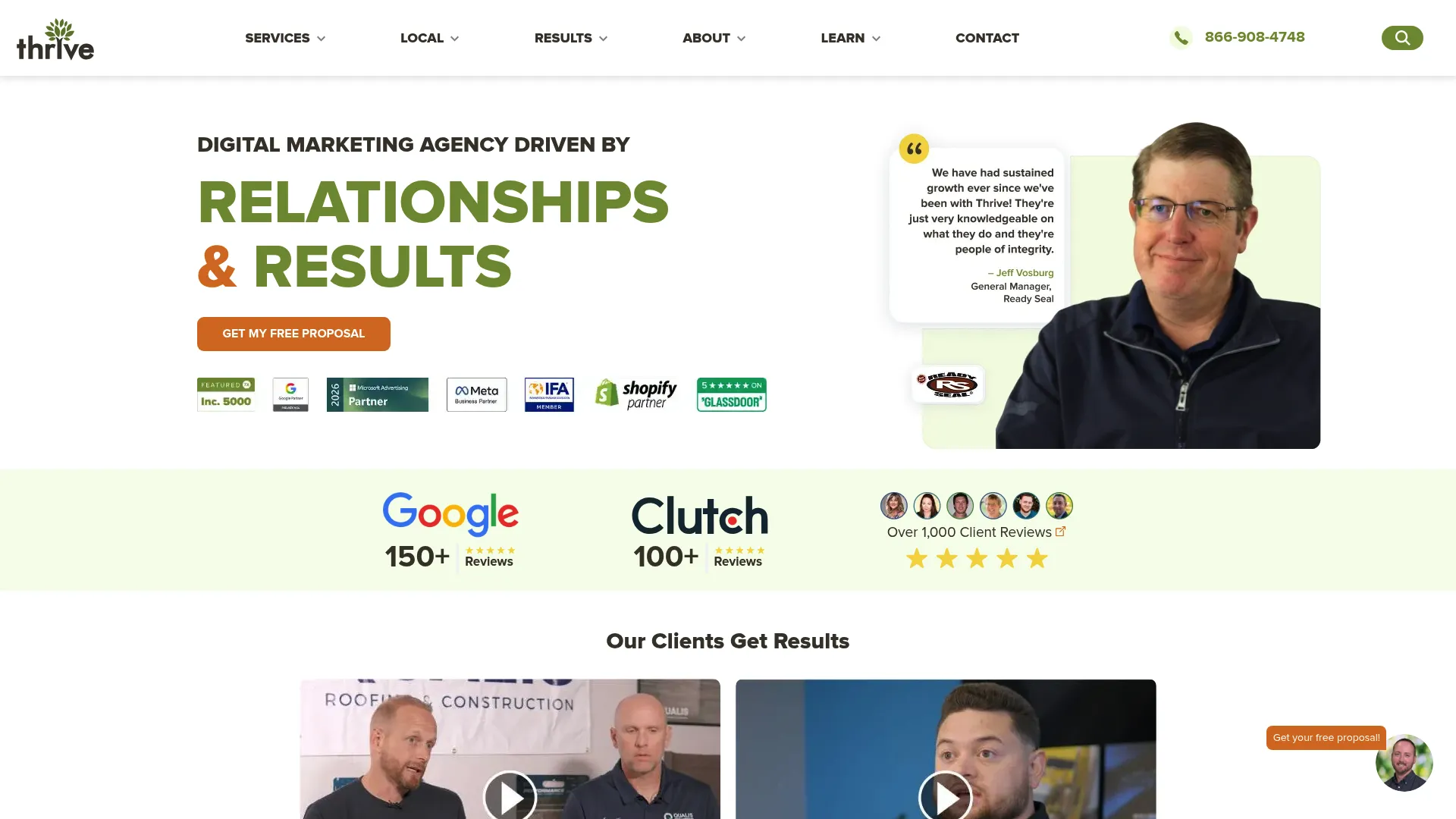
Best for: Businesses needing SEO, paid media, and web development under one contract. Core services: SEO, pay-per-click advertising, website design and development. Verticals: Not publicly specified. Note: Positioned as a full-service digital marketing partner using data-driven strategies.
6. Splurge Media - best for small-business marketing support
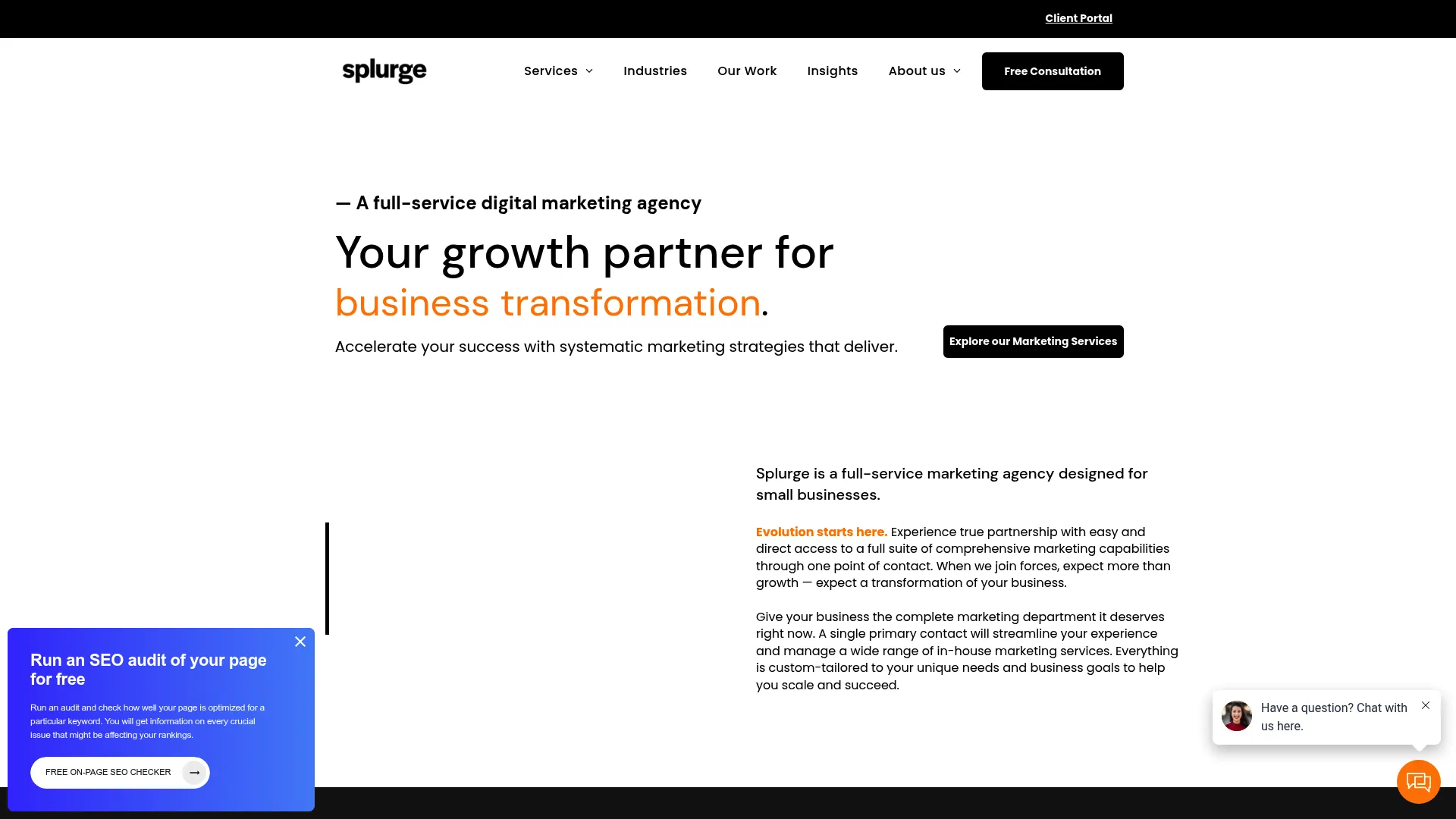
Best for: Small businesses seeking an outsourced marketing function. Core services: Marketing strategy and planning, web design and development, SEO and paid media campaigns. Verticals: Not publicly specified. Note: Holds a 4.8/5 G2 rating.
7. KEXINO - best for B2B strategy and branding-led growth
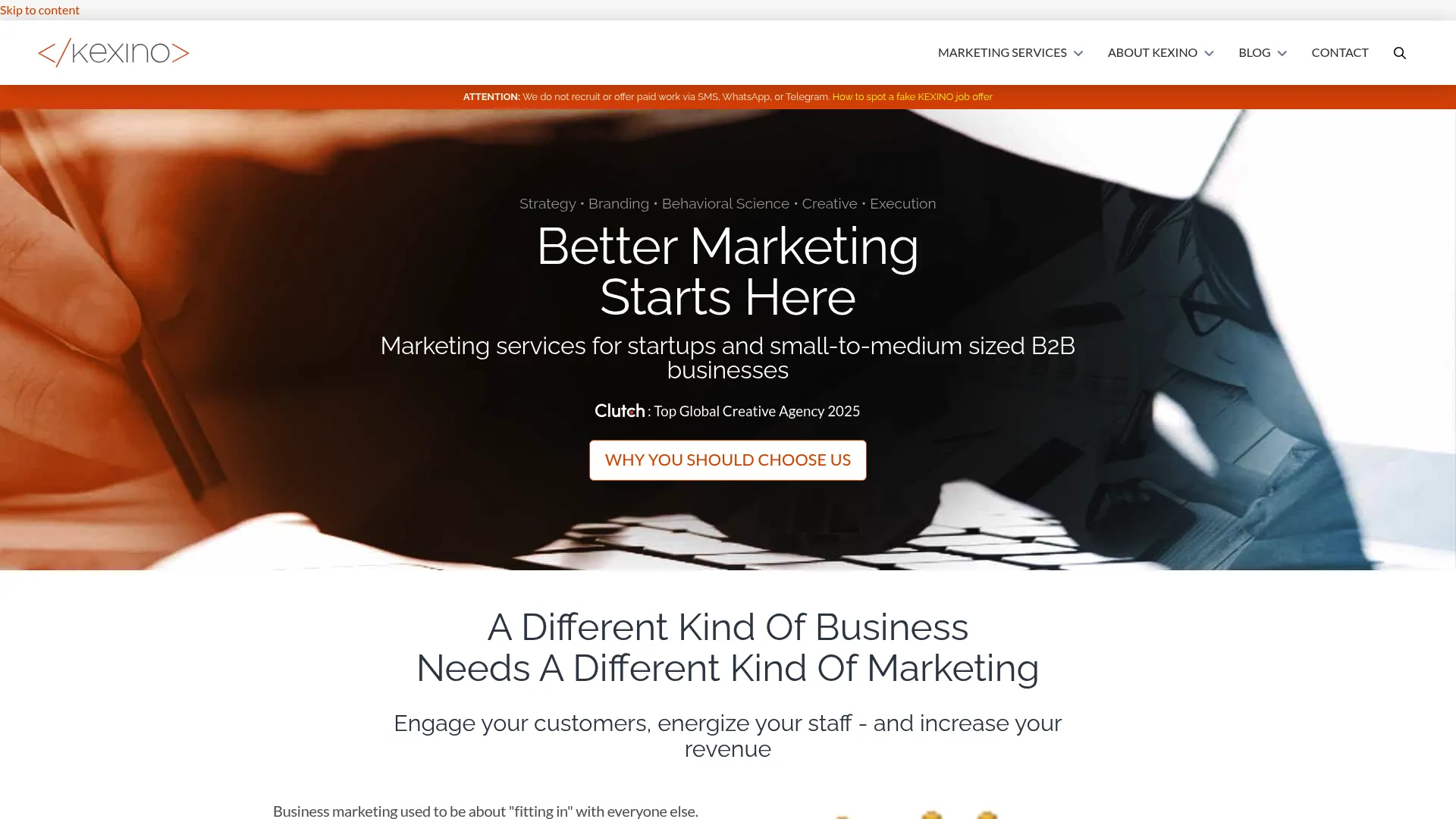
Best for: Startups and small-to-medium B2B businesses needing outsourced growth marketing. Core services: Branding and marketing strategy, SEO and content marketing, lead generation and conversion rate optimisation. Verticals: B2B. Note: Applies behavioural-science-informed strategy to B2B marketing execution.
8. Orange Pegs - best for HubSpot CRM and revenue operations
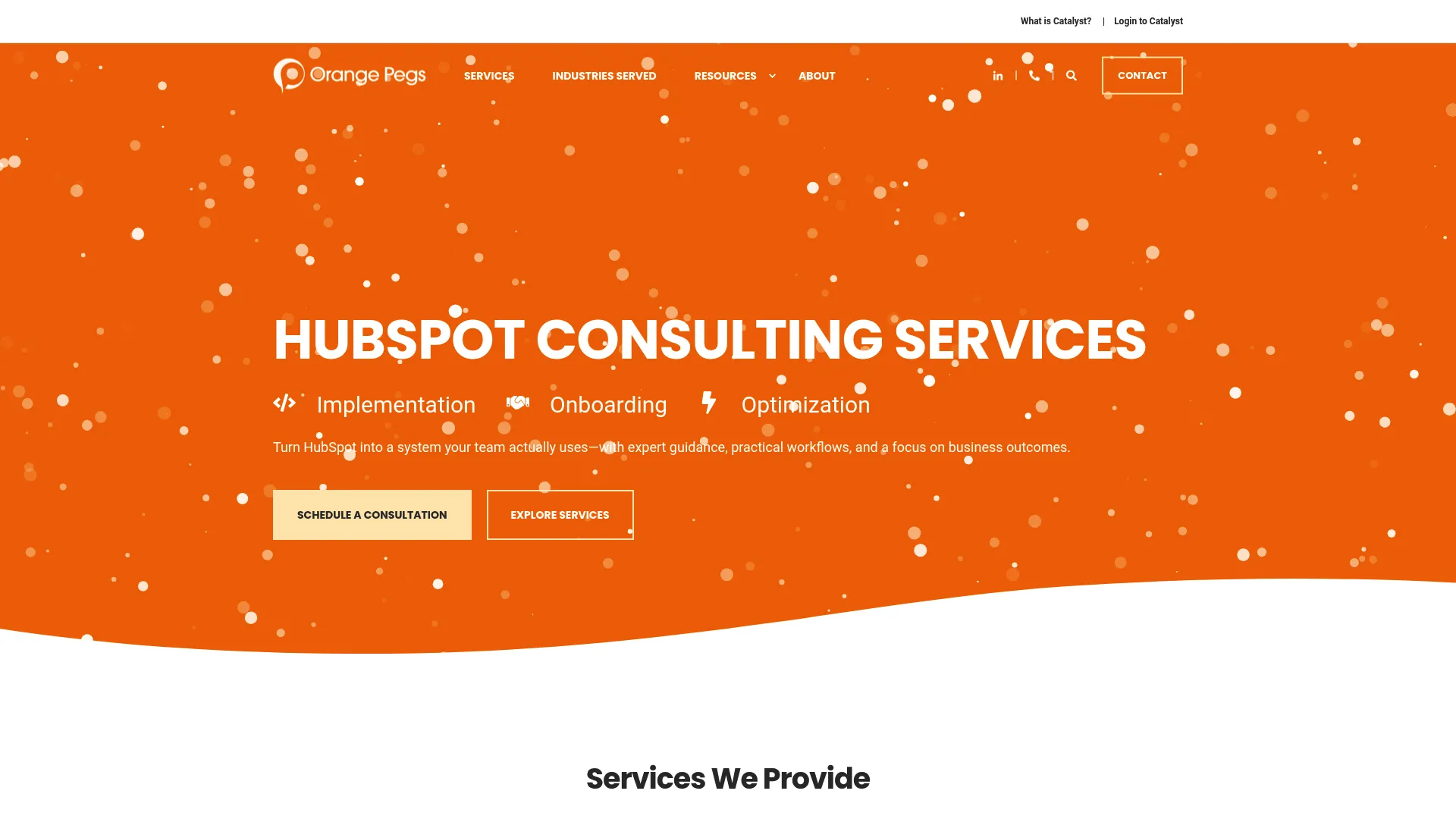
Best for: B2B or ecommerce teams implementing or optimising HubSpot CRM. Core services: HubSpot implementation and CRM system design, onboarding and training, CRM optimisation, automation, reporting, and sales enablement. Verticals: B2B, ecommerce. Note: A consulting partner rather than a media-buying agency - useful alongside a performance team.
Buyer check: Ask who owns ad accounts, pixels, analytics properties, CRM integrations, and creative files before signing anything.
How brand marketing and performance marketing work together
Brand marketing builds recognition, trust, and future demand. Performance marketing captures existing demand and optimises measurable actions such as leads, bookings, or purchases. They work best as one system: stronger brand signals can improve consideration and commercial efficiency, while performance data reveals which audiences, messages, and offers deserve further investment.
The evidence supports the connection without promising a fixed effect. Nielsen reports that a one-point gain in awareness or consideration is associated, on average, with a 1% increase in sales, and its research links the same movement to lower short-term CPA. IPA analysis of its Effectiveness Databank found that 93% of for-profit campaigns reporting very large increases in brand trust also reported at least one very large business effect, against 66% across the full for-profit sample.
- Shared audience insight feeds both creative development and media planning.
- Message consistency from ad to landing page reduces conversion friction.
- Brand demand supplies warmer audiences to activation campaigns.
- Performance testing validates brand narratives, not only promotions.
Brand × performance principle: The IPA recommends balancing longer-term brand building with short-term activation, and identifies a roughly 60:40 brand-to-activation split as a rule of thumb rather than a fixed law. Treat the ratio as a planning starting point and test it against your category.
Related reading: full-funnel performance marketing strategy.
What to measure beyond ROAS
ROAS is useful but incomplete. It measures attributed revenue against spend inside one platform and one attribution model. It does not prove incrementality, lead quality, profitability, pipeline progression, or the absence of duplicate attribution. Review it alongside a measurement hierarchy.
- Media metrics: CPM, CPC, CTR, reach, frequency - diagnostic signals that describe delivery, not commercial value.
- Conversion metrics: conversion rate, CPL, CPA, CAC - useful only when definitions are standardised.
- Lead quality: MQLs, SQLs, accepted leads, booked appointments, site visits - see how PPC lead generation should be managed against booked revenue.
- Commercial metrics: qualified pipeline, booked revenue, gross margin, payback period, repeat purchase.
- Brand and demand signals: branded search, direct traffic quality, share of search, assisted conversions.
- Incrementality: holdouts, geo tests, matched-market tests, and lift studies.
Red flag: Platform-reported ROAS looks healthy while CRM-recorded revenue stays flat. Possible causes include attribution overlap, duplicate conversions, timing and attribution-window differences, CRM integration errors, refunds, or low lead quality. A capable agency will investigate all of them rather than defend the dashboard.
Measurement reality: Ask how platform conversions will be validated against CRM-qualified outcomes. Google documents enhanced conversions for leads, which uses hashed user-provided data to supplement offline conversion imports and improve attribution and bidding. It also documents limits - offline conversions uploaded more than 90 days after the associated last click are not imported, and enhanced-conversion lead uploads carry a 63-day limit. An agency that cannot explain these constraints cannot reconcile your reporting.
Related reading: measurable performance marketing services.
Choosing an agency for your industry
Vertical experience changes what "good" looks like, because the conversion path and the definition of a qualified outcome differ by category.
- Healthcare: Compliance-aware claims and creative review, consented handling of patient and lead data, appointment quality over raw lead volume, and local service-area discoverability. See how to structure Google Ads campaigns for hospitals.
- Real estate: Lead-to-site-visit rate, project-level campaign and CRM attribution, speed-to-lead discipline, duplicate and invalid-lead handling, and progression to bookings - cost per site visit for Indian developers explains the benchmark that matters.
- Manufacturing: Long-cycle pipeline reporting, dealer and distributor journey visibility, MQL-to-SQL acceptance, technical content and search demand capture, and offline conversion imports. Related: how industrial buyers generate manufacturing enquiries.
- Hospitality: Direct-booking economics, seasonality and occupancy context, booking-engine conversion rate, cost per booking, repeat demand, and OTA channel dependency - compare direct booking campaigns against OTA commissions for Indian hotels.
Engagement models typically include monthly retainers, percentage of media spend, hybrid arrangements, project-based audits, and outcome-linked fees. Each carries a different incentive structure - percentage-of-spend models reward larger budgets, while outcome-linked models require airtight definitions of a qualified outcome. Read what to expect from a performance marketing agency and the ecommerce performance marketing agency buyer guide before negotiating.
What is changing in performance marketing in 2026
Five shifts should influence your shortlist this year.
- AI-mediated discovery and GEO: Generative engine optimisation focuses on being retrieved, represented, and cited in generative answers. The Princeton research paper introducing GEO frames it as improving content visibility in generative-engine responses. Google's documentation confirms that no AI-specific files or special schema markup are required - existing Search fundamentals still apply.
- First-party data activation: Consented CRM audiences and offline conversion imports carry better-defined outcomes - qualified leads, opportunities, revenue - back into bidding systems, within documented privacy rules.
- Attribution constraints: Independent measurement and platform-recommended optimisation will disagree. Mature partners explain the gap instead of hiding it.
- Creative velocity: AI-assisted production increases volume, but governance over claims, brand consistency, and compliance decides whether that volume helps.
- Conversational conversion: WhatsApp, chat, and AI qualification flows function as measurable funnel stages. Meta reports that marketers using business-messaging solutions cited a 58% increase in leads in one study - directional evidence, not a guaranteed benchmark.
A working conversational funnel looks like this: ad click → chat initiation → qualification questions → consent capture → human or automated handoff → appointment, quote, or booking → CRM status update → offline conversion feedback to the media platform.
For budget-allocation context, see paid media performance marketing experts and the specialist performance marketing agency versus in-house comparison.
Choose a partner that owns outcomes, not deliverables
The fastest way to test fit is a diagnostic, not a pitch. A useful audit reviews paid media structure, conversion paths, analytics setup, SEO and GEO visibility, and the lead-quality feedback loop - then states what should change first and why.
DAM perspective: Evaluate whether an agency connects media, creative, conversion paths, and business feedback loops before comparing channel credentials. Channel skill is common. System ownership is not. That is the standard set out in this view on revenue accountability among Bangalore digital marketing agencies.
Get a free audit or assessment → digitaladvantagemedia.com
See performance marketing case-study results and the best performance marketing agency in Bangalore overview, or start with choosing the best performance marketing agency.
Frequently asked questions
What is a performance marketing agency?
A performance marketing agency plans, runs, and improves marketing activity against measurable business outcomes such as leads, bookings, or purchases. Channel mix, conversion definitions, and measurement depth depend on the business model, sales cycle, and available first-party data.
How do I choose the best performance marketing agency?
Assess strategic fit with your business model, measurement and attribution maturity, relevant industry experience, creative and CRO capability, reporting transparency, data and account ownership, and how the agency validates lead quality against CRM outcomes rather than platform conversions.
What is the difference between a digital marketing agency and a performance marketing agency?
A digital marketing agency may cover a broad service range including web, brand, and content. A performance marketing agency places measurable actions and commercial outcomes at the centre of optimisation, structuring media, creative, and reporting around those results.
How long does performance marketing take to show results?
Timelines depend on sales-cycle length, existing demand, tracking readiness, data quality, testing velocity, and conversion-path quality. Ecommerce signals appear faster than long-cycle B2B or real estate pipelines, where booked outcomes lag media activity by months.
What is GEO in digital marketing?
Generative engine optimisation is an emerging discipline focused on improving how a brand and its expertise are discovered, represented, and cited in AI-mediated answer experiences. It complements SEO rather than replacing crawlability, helpful content, and technical quality.
Is ROAS enough to evaluate a performance marketing agency?
No. ROAS reflects attributed revenue within one platform and attribution model. Review it alongside CAC, conversion rate, lead quality, qualified pipeline, revenue contribution, margin, payback period, repeat purchase, and documented attribution limitations.
What should I ask before hiring a performance marketing agency?
- Who owns the ad accounts, pixels, analytics properties, CRM integrations, and creative files?
- How will platform conversions be validated against CRM-qualified outcomes or commerce revenue?
- What is the testing cadence and the decision process for acting on results?
- What happens, specifically, when performance declines?
Looking to improve your digital presence and grow your business with a targeted marketing strategy? Get in touch with Digital Advantage today for a personalised consultation.